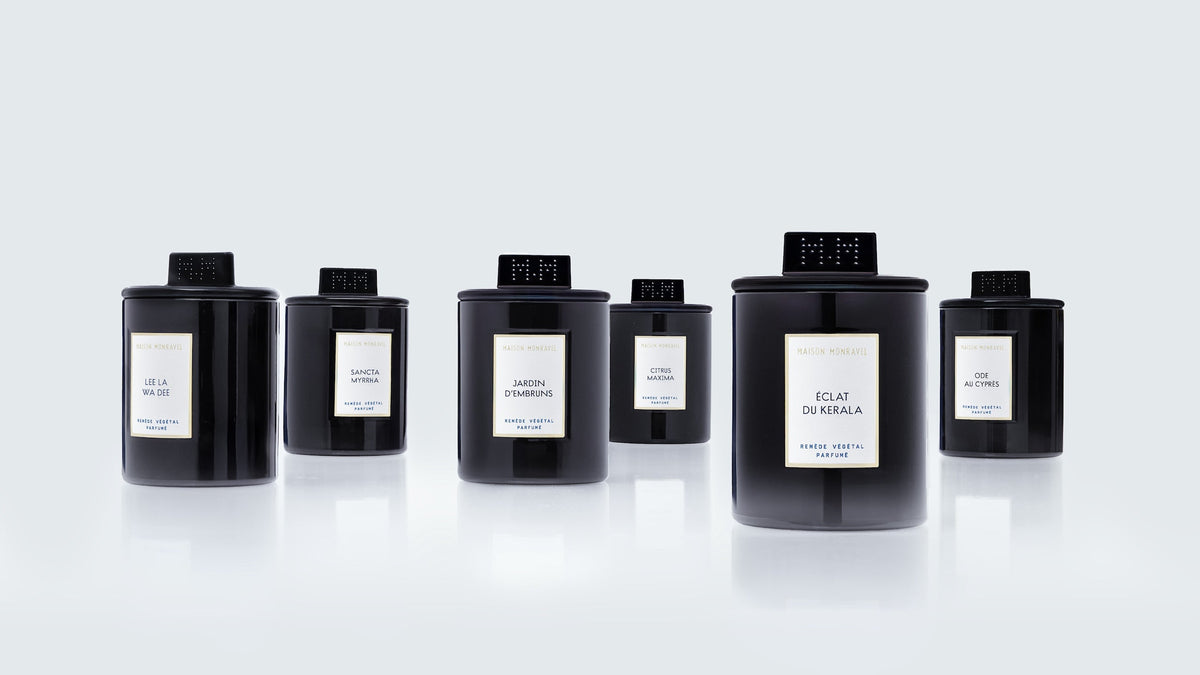
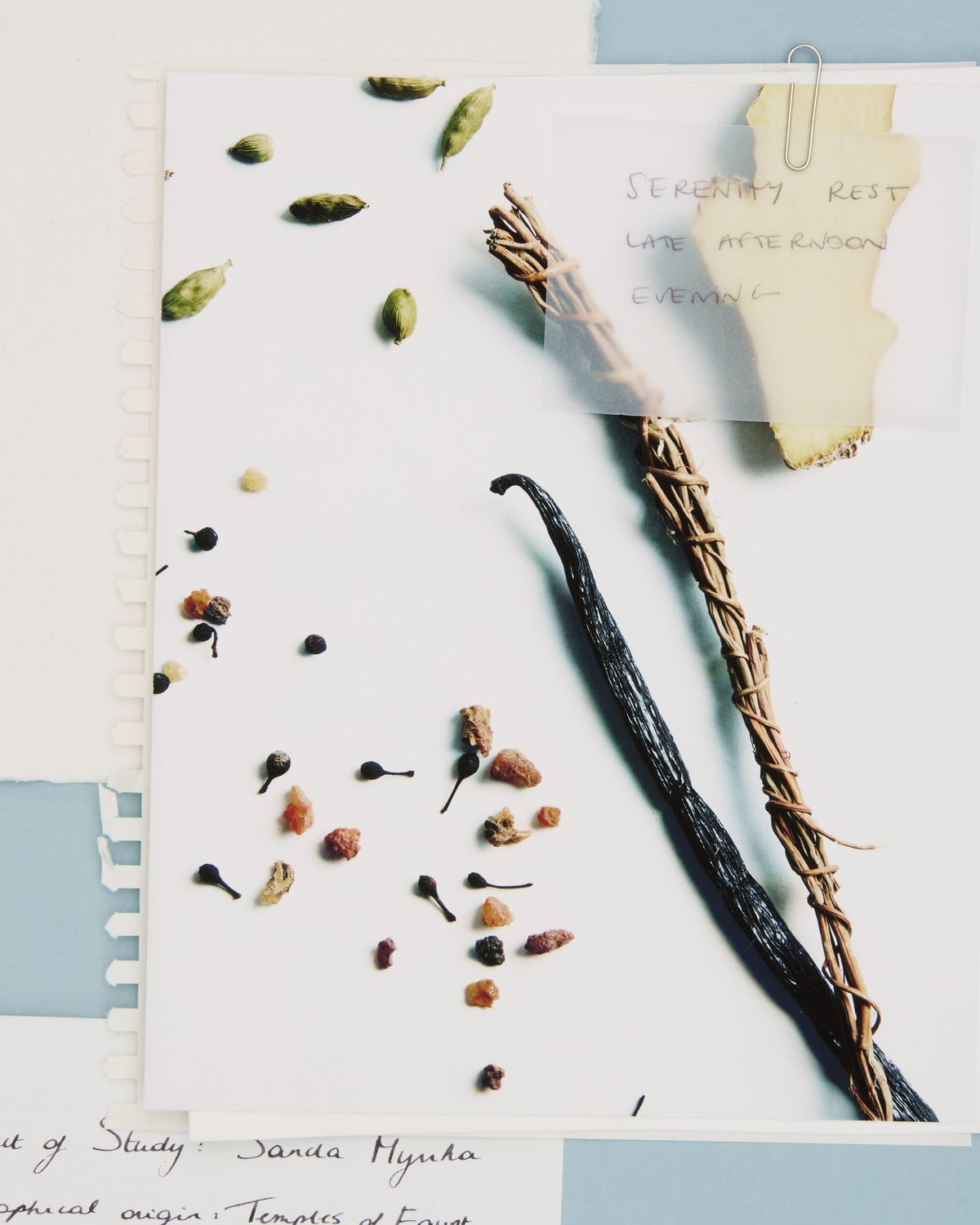
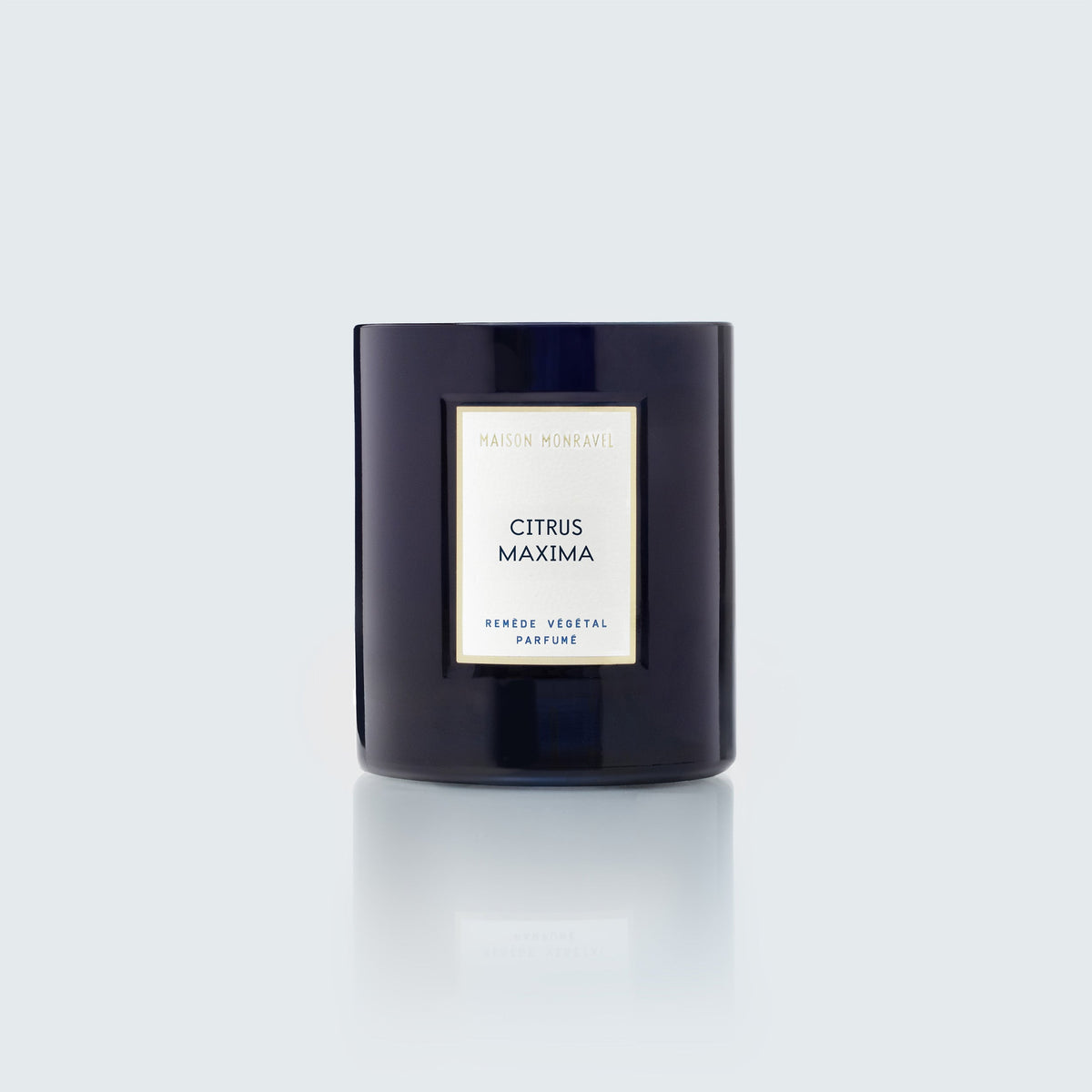
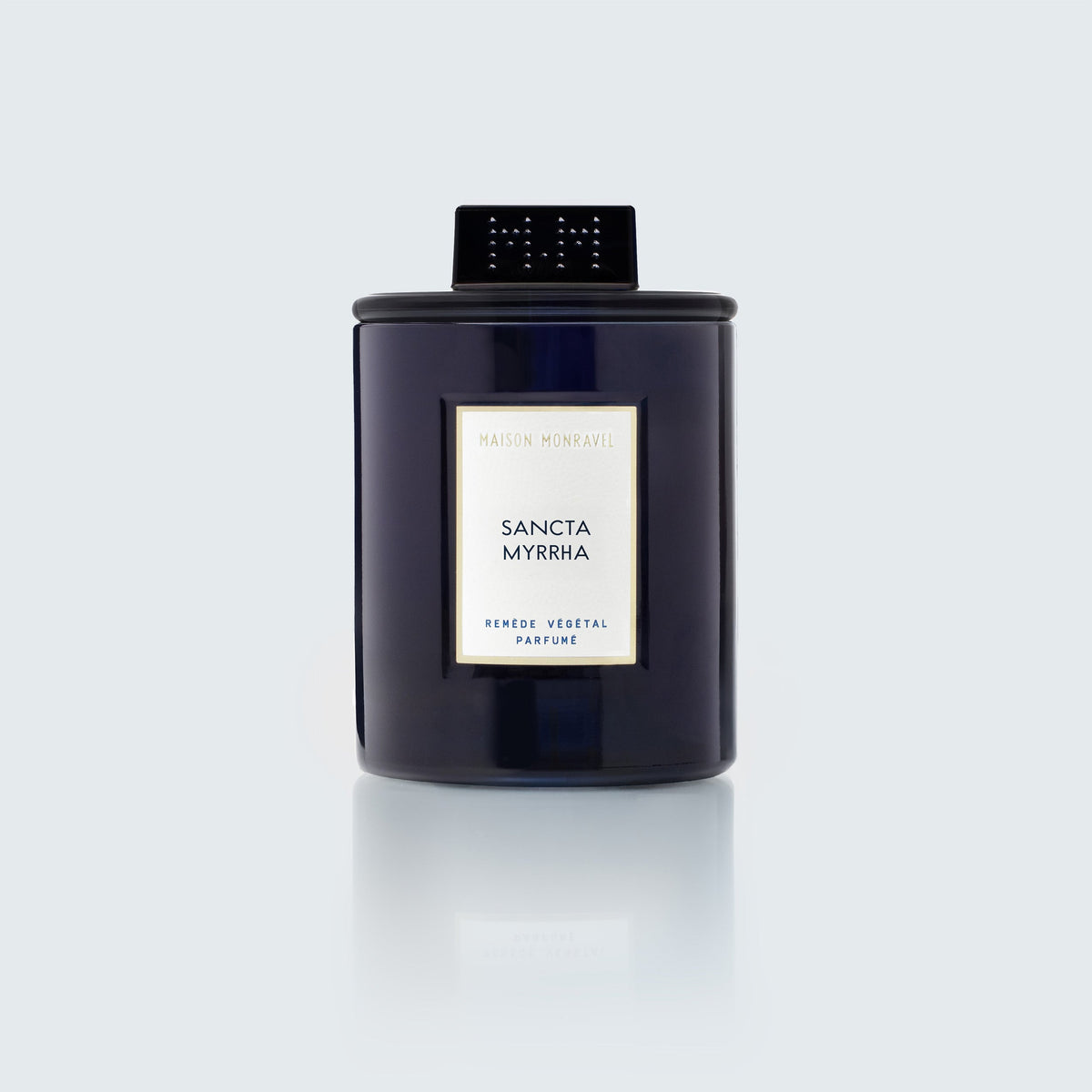
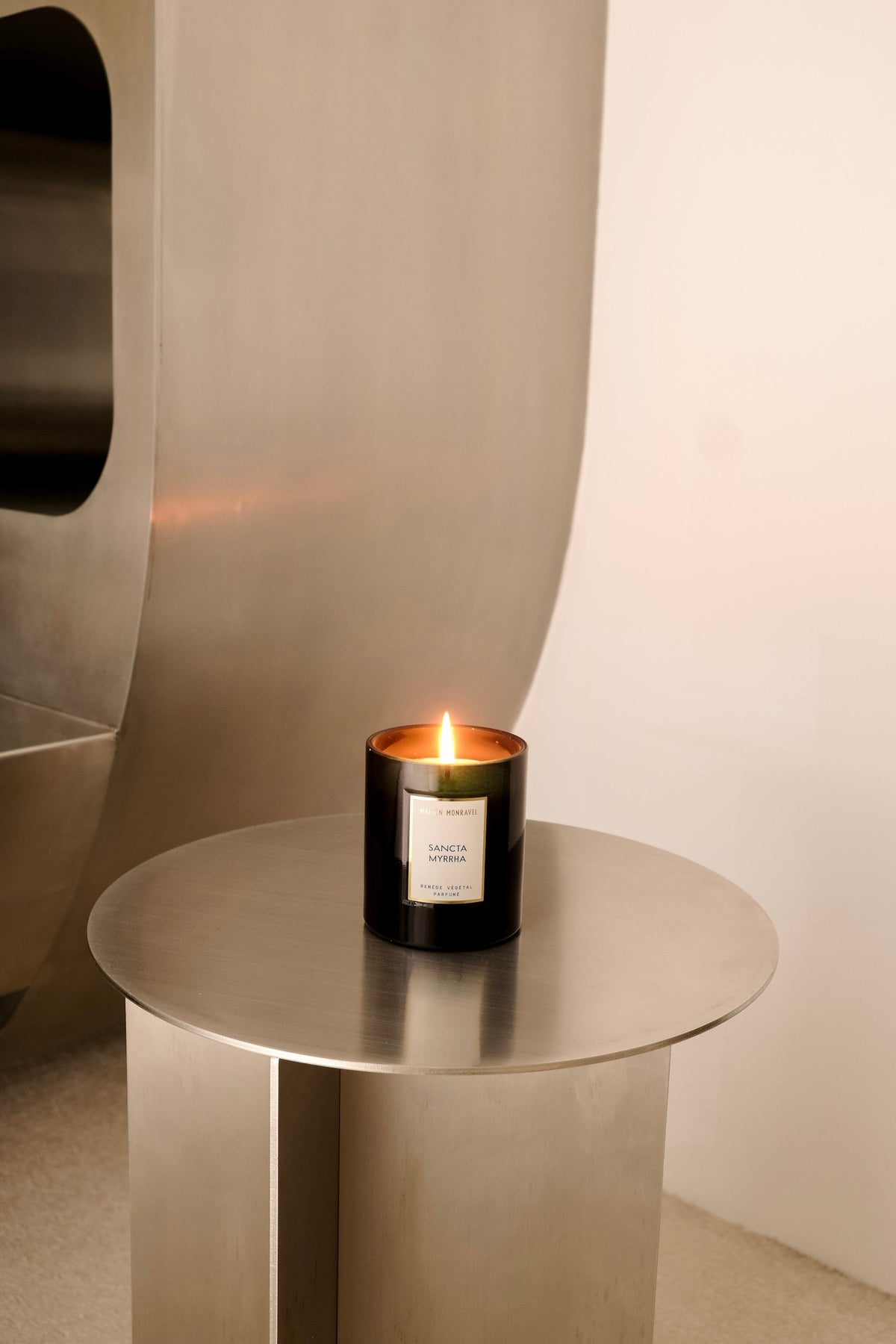
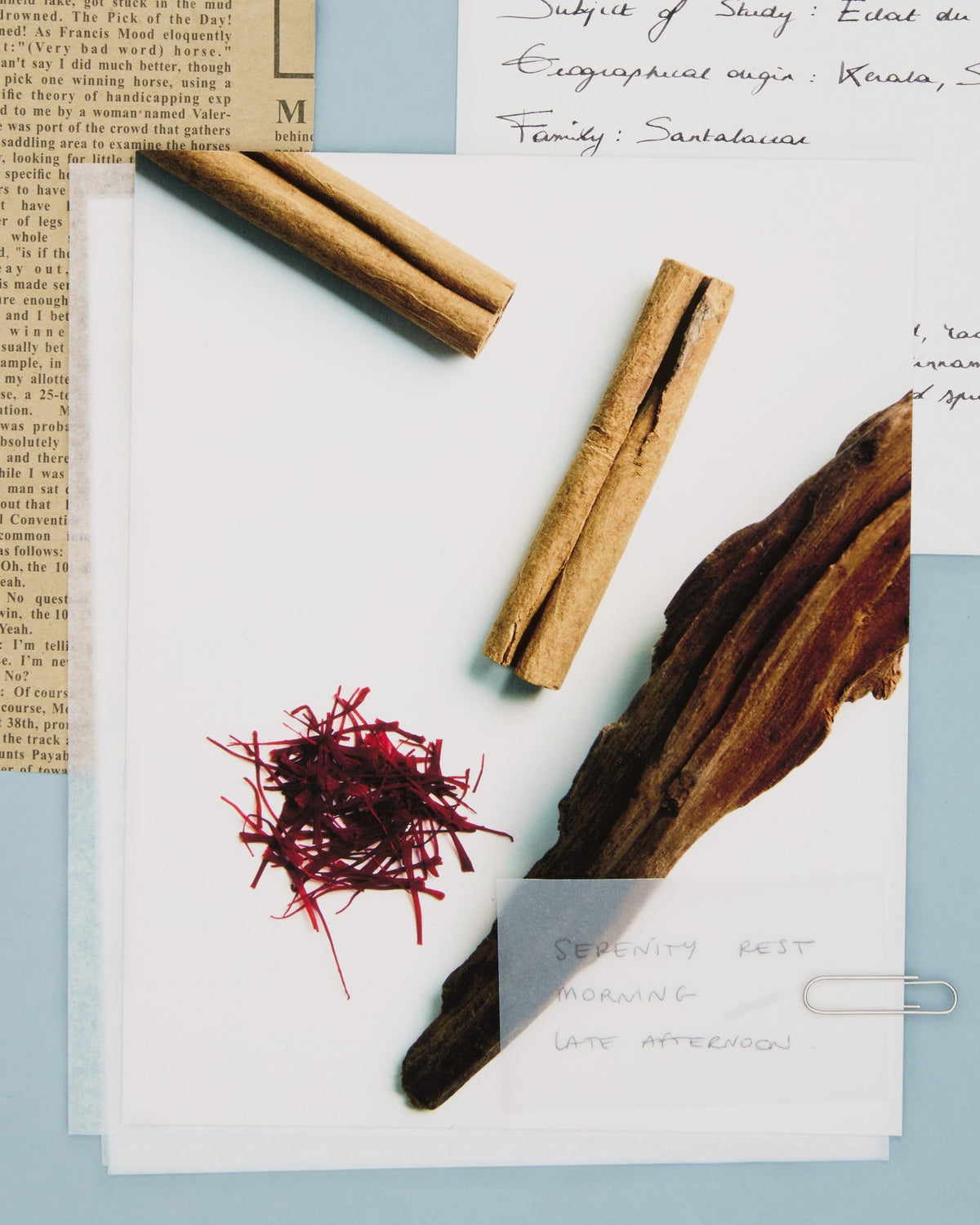
A scented remedy is a fragrance composed to accompany an inner state: energy, joy, serenity or rest. At Maison Monravel, a house of perfumes and remedies, it takes the form of a Signature Candle or a Scented Stone. The idea is very old. Before it was a luxury, perfume was a form of care: people credited it with purifying, soothing or stimulating virtues. A scented remedy is not a medicine. It does not treat anything; it creates an atmosphere and invites an inner state.In the beginning, perfume was smokeThe word itself remembers where it began. Perfume goes back to the Latin per, “through”, and fumare, “to smoke”. Perfume was first smoke: the smoke of resins and aromatics burned in temples to honour the gods.Myrrh and frankincense in ancient EgyptMyrrh and frankincense are resins. The first seeps from trees of the genus Commiphora, the second from trees of the genus Boswellia. These trees grow notably in the Horn of Africa and on the Arabian Peninsula. Egypt therefore brought them from afar. In the fifteenth century BCE, under the reign of Hatshepsut, an expedition returned from the land of Punt with myrrh and incense. The reliefs of her temple at Deir el-Bahari still tell the story.Myrrh was also used, with natron, to embalm the dead. Kyphi, for its part, was a compound incense; recipes for it are carved on the walls of the temples of Edfu and Philae. It belonged both to ritual and to the pharmacopoeia of its time.The attars of Persia and the art of distillationThe word attar comes from the Persian and Arabic itr, meaning “perfume”. In the medieval Islamic world, Arab and Persian scholars refined the distillation of rose water, the Persian golab. Attars are scented oils, generally distilled into a wood base such as sandalwood, then aged. In Kannauj, India, these techniques are still in use.Grasse, from perfumed gloves to the heritage of humanityIn France, this story runs through Grasse. In the Middle Ages, the town worked leather. To soften its smell, gloves began to be perfumed, and tanners gradually became glove-maker perfumers. Since 2018, the skills related to perfume in the Pays de Grasse have been inscribed by UNESCO as Intangible Cultural Heritage of Humanity. It is in Grasse that our fragrances, composed with a French perfumer, are developed.Our approach: giving perfume back its first callingThe story of Maison Monravel brings together two legacies. Constance de Monravel descends from Louis de Montravel, a 19th-century botanist. Her wife, Marguerite, is a pharmacist. Together, they reconnect with these traditions to give perfume back its first calling, that of a sensory remedy.Each of our compositions contains between 75% and 90% ingredients of natural origin. Our scented remedies take two forms. The Signature Candle is poured in an entirely plant-based rapeseed wax, free of paraffin. The Scented Stone, carved from Lutetian limestone, absorbs the fragrance and releases it slowly, without flame or heat.The four inner statesWe do not sort our scents by olfactory family. We start from what you wish to feel. Our six creations are arranged across four inner states.Energy: Citrus Maxima, with mandora, blood orange and neroli, and Jardin d’Embruns, with peppermint, clary sage and seaweed.Joy: Lee La Wa Dee, a bouquet of frangipani, jasmine and ylang-ylang.Serenity: Ode au Cyprès, with cypress, wild rose and frankincense, and Éclat du Kerala, with sandalwood, cinnamon and saffron.Rest: Sancta Myrrha, built around myrrh, frankincense and benzoin.An inner state is not a promised effect. It is an intention: the one you set when you light a candle on waking, or scent a stone at dusk. The fragrance accompanies it.Living with a scented remedy every dayA scented remedy is lived as a ritual: a simple, repeated gesture that marks a moment of the day. In the morning, a flame and the brightness of citrus. In the evening, resins that slowly unfold. To find yours, our short scent quiz guides you in a few questions.Frequently asked questionsIs a scented remedy a medicine?No. A scented remedy does not treat anything and replaces no treatment. It creates an atmosphere and accompanies an inner state, in the spirit of ancient scented rituals.Where does the idea of perfume as care come from?It runs through history. In ancient Egypt, myrrh and frankincense served ritual, and kyphi also belonged to the pharmacopoeia. Later, Persia and India made an art of scented waters and oils.Where are Maison Monravel fragrances created?Our fragrances are composed with a French perfumer, then developed in Grasse. Our Signature Candles are poured in the Loire Valley, in jars crafted in Tuscany by master glassmakers.How do you choose your scented remedy?Start from the state you wish to invite: energy, joy, serenity or rest. Our short quiz then points you towards one of our six scents.