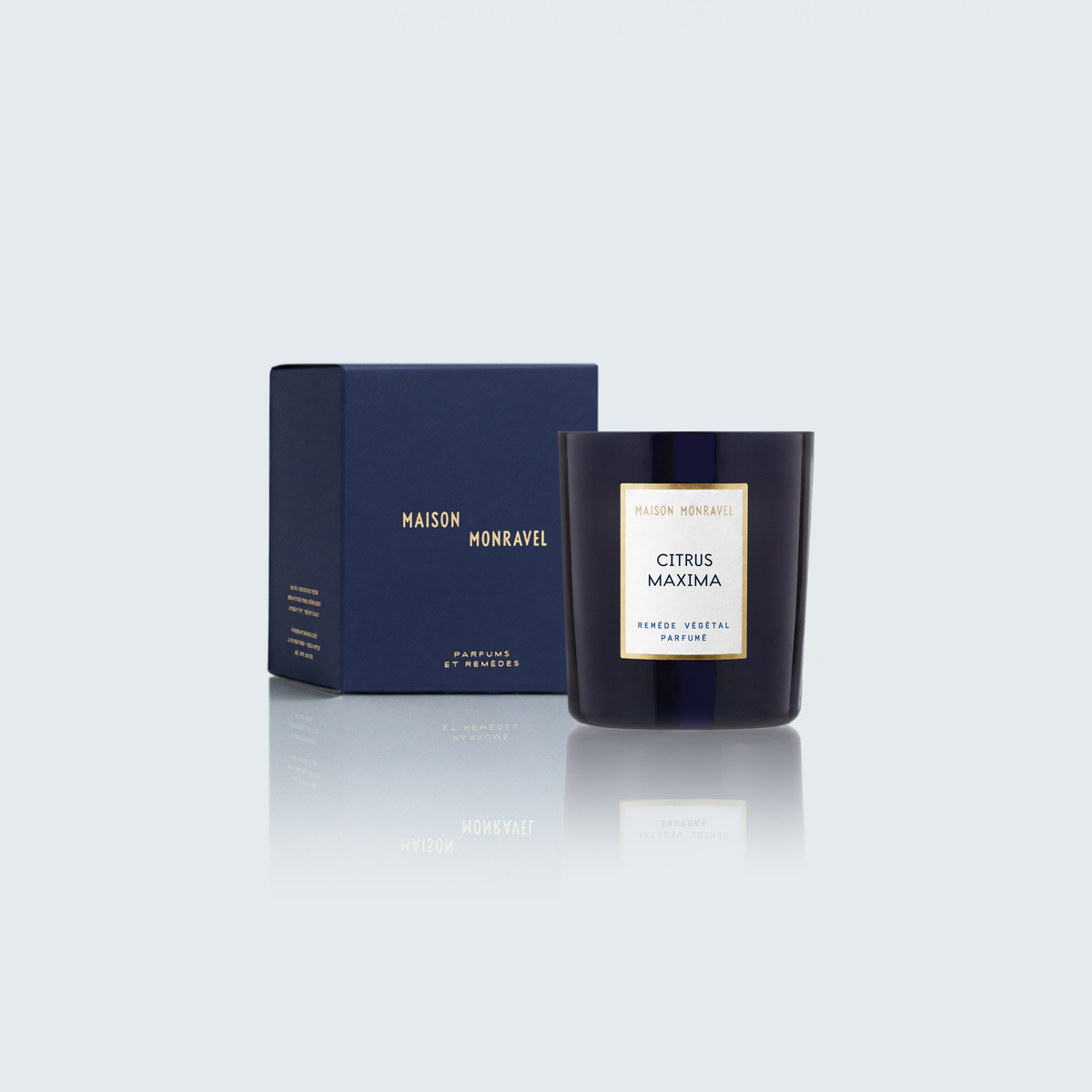
The Mediterranean cypress, Cupressus sempervirens, is a conifer with evergreen foliage and a slender silhouette. Familiar in Tuscan landscapes and places of contemplation since Etruscan times, it has given the Mediterranean one of its most enduring images. Its fresh, resinous essence lies at the heart of our Ode au Cyprès candle.
An evergreen tree
Its Latin name says it all: sempervirens, “always green”. In every season, the cypress keeps its foliage of small scales pressed tightly along its twigs, and bears round cones that turn brown as they ripen. It lives a long time: in natural stands, trees two to five centuries old are not rare.
Its native range lies in the eastern Mediterranean, from the Aegean islands and Cyprus to Turkey, the Middle East and Iran. Cultivated since Antiquity, it has travelled so widely that no one is quite sure where it grows wild. Its wood, which resists insects and damp, was used for doors, linen chests and shipbuilding.
From the Etruscans to the avenues of Tuscany
Tradition credits the Etruscans, great seafarers, with bringing the cypress to Tuscany, and with the custom of planting it near tombs. The Romans followed. From the Middle Ages to the eighteenth century, the villas of great Tuscan families opened onto long cypress avenues. In the Val d’Orcia, inscribed on the UNESCO World Heritage List in 2004, its silhouettes, alone or in clusters, punctuate the hills.
The most famous of these avenues leads to the village of Bolgheri: five kilometres and 2,540 cypresses planted in the nineteenth century, from the oratory of San Guido to the village. The poet Giosuè Carducci, who spent part of his childhood in Bolgheri, celebrated it in “Davanti San Guido”.
A tree of remembrance
The Greeks gave the cypress its legend. In the Metamorphoses, Ovid tells the story of young Cyparissus, who accidentally killed the stag he cherished. Inconsolable, he asked to be allowed to mourn it forever: Apollo turned him into a cypress, the tree that accompanies grief. In Rome, a cypress branch placed at the entrance of a house signalled a death in the family.
Evergreen and reaching towards the sky, the cypress became the tree of places of contemplation, and a symbol of eternity through the seasons.
The cypress and the family of Louis de Montravel
For Maison Monravel, the cypress is also a family story. It appears on the coat of arms of the family of Louis de Montravel, a nineteenth-century botanist from whom Constance de Monravel, co-founder of the House, descends. Our jars are crafted in Tuscany by master glassmakers: in a way, the cypress finds its landscape again.
The scent of cypress
Cypress essential oil is obtained by steam distillation of its twigs. Its scent is fresh, resinous and green, with a woody facet that turns almost amber at its base. It owes much to alpha-pinene, the molecule that gives conifer forests their unmistakable smell.
Ode au Cyprès, a walk beneath the cypresses
Our Ode au Cyprès candle opens on cypress and pine, with the greenness of galbanum and crushed damp leaves. At its heart, wild rose, rose geranium and cyclamen flower soften the conifers; frankincense, cedar and blond woods draw out its trail. Composed in Grasse with a French perfumer, this fragrance belongs to the Serenity virtue.
We like to light it in a moment of calm or concentration, in the afternoon, when the day calls for clarity. Poured in the Loire Valley in plant-based rapeseed wax, the 240 g Signature Candle burns for about 60 hours. This fragrance also comes as a candle topped with its monogrammed glass lid, as a Scented Stone and in the Ritual Set, which brings the two together.
Cypress also appears in Sancta Myrrha, alongside myrrh and frankincense. To discover the other woods in our herbarium, visit our Botanica page.
Frequently asked questions
What does the cypress symbolise?
Evergreen and reaching towards the sky, the cypress has symbolised eternity and remembrance since Antiquity. Around the Mediterranean, it accompanies places of contemplation; in Tuscany, it shapes the landscape.
Why are cypresses found in cemeteries?
The custom goes back to Antiquity: tradition credits the Etruscans with planting it near tombs, and the Romans associated it with mourning. Its evergreen foliage made it a symbol of eternity.
What does cypress smell like?
Fresh, resinous and green, with a woody facet. It recalls conifer forests, with which it shares alpha-pinene.
Which candle should I choose for a cypress scent?
Ode au Cyprès, which brings together cypress, pine, wild rose and frankincense. It comes as a 240 g Signature Candle and as a Scented Stone.
Further reading